
Modular Computing Data Center Checklist
Modular equipment rooms have become the mainstream construction model for telecom operators and computing centers. For site selection, existing facilities such as factory buildings or warehouses can be repurposed; a dedicated power distribution room is not required. The site need only meet a floor load capacity of 300 kg/m² and maintain a noise level below 60 dB. Air supply can be deployed directly at floor level, eliminating the need for raised flooring. 24/7 on-site staffing is unnecessary, as O&M data is automatically recorded and uploaded.
Management is centrally unified across the region, with automatic fault localization and alerting capabilities. For standard servers—specifically in deployments under 50 square meters where individual cabinet power consumption is less than 6 kW—a single-row modular room configuration is suitable. For AI and High-Performance Computing (HPC) applications—specifically in deployments exceeding 50 square meters where individual cabinet power consumption exceeds 10 kW—a double-row micro-modular room configuration is recommended. Regarding investment strategy: if the priority is a one-time capital outlay with a "build-as-you-grow" approach, the single-row or single-cabinet solution offers greater flexibility, cost savings, and faster deployment. Conversely, if high reliability and long-term operational stability are paramount, the double-row solution proves more cost-effective in the long run due to sustained electricity savings and a lower fault rate, resulting in a lower total cost of ownership.
Comparison Table: Single Row vs Double Row Micro-Modules
| Comparison Dimension | Single Row Micro-Module | Double Row Micro-Module |
|---|---|---|
| Core Architecture | Single-row cabinet layout, back against wall/partition, closed aisle | Double-row cabinet layout in "face-to-face" or "back-to-back" configuration, forming closed cold/hot aisles ¹ ² |
| Applicable Scenarios | Space-constrained office buildings, small computer rooms (20-50㎡), outlets, weak current rooms ³ | Large and medium-sized data centers, cloud nodes, enterprise core computer rooms, requiring high redundancy and high-density deployment ⁵ ¹⁰ |
| Number of Cabinets | Typically 2 ~ 24 units ⁵ ⁷ | Typically 6 ~ 48 units ⁵ ⁷ |
| Floor Width | Approx. 2.4 meters (including aisle) ⁴ ⁵ | Approx. 3.4 - 3.6 meters (including aisle) ⁴ ⁵ |
| Power per Cabinet | Typically 8 - 15kW, high configuration up to 21-30kW ⁵ ⁸ | Typically 10 - 21kW, high configuration supports 20-50kW ⁵ ⁶ |
| Reliability Level | Typically meets Tier I - III, suitable for standard services ³ | Supports Tier III - IV, key components support N+1 or 2N redundancy ¹⁰ |
| PUE Reference Value | 1.2 - 1.4 (benefiting from high-efficiency fluorine pump or free cooling technology) ³ ⁶ | 1.25 - 1.45 (excellent performance even in large-scale deployment) ⁶ ⁸ |
Detailed Construction Checklist and Configuration Guide
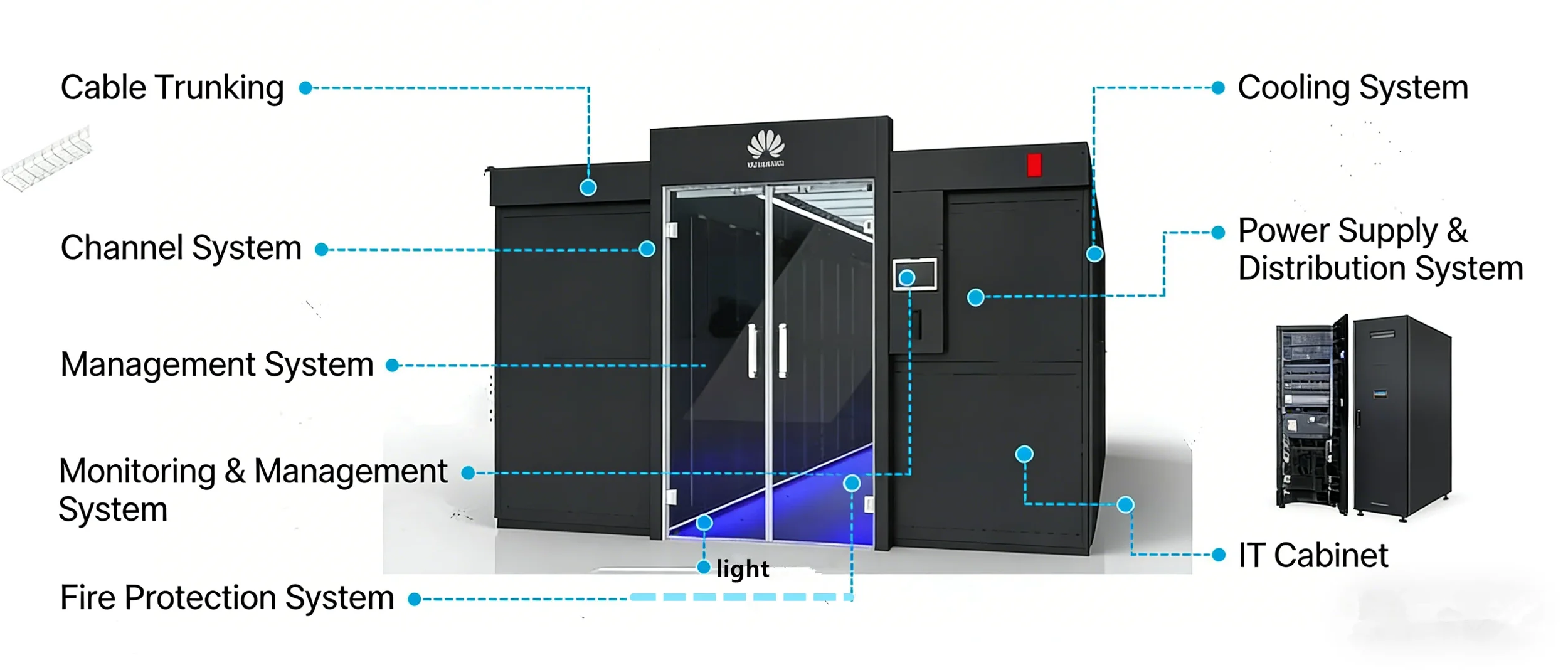
1. Cabinet System (Cabinets, Sealed Aisle Components)
ANSI/EIA-310-D standard cabinets; height: 2000–2200 mm (42U–47U); static load capacity: 1500 kg. The sealed aisle typically employs a design featuring skylights and end doors; it must be seismically tested, and the skylights are required to support integration with the fire alarm system.
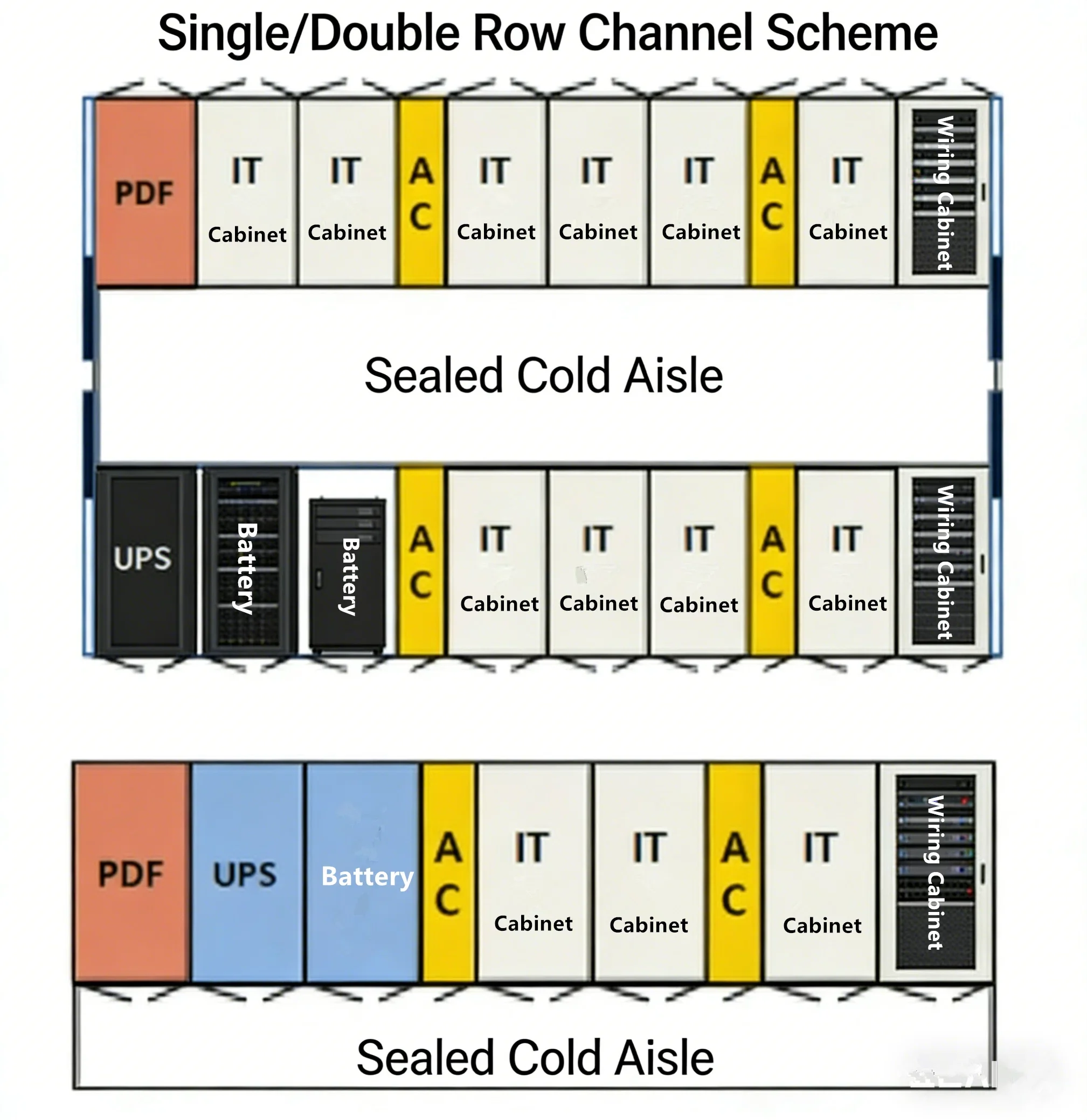
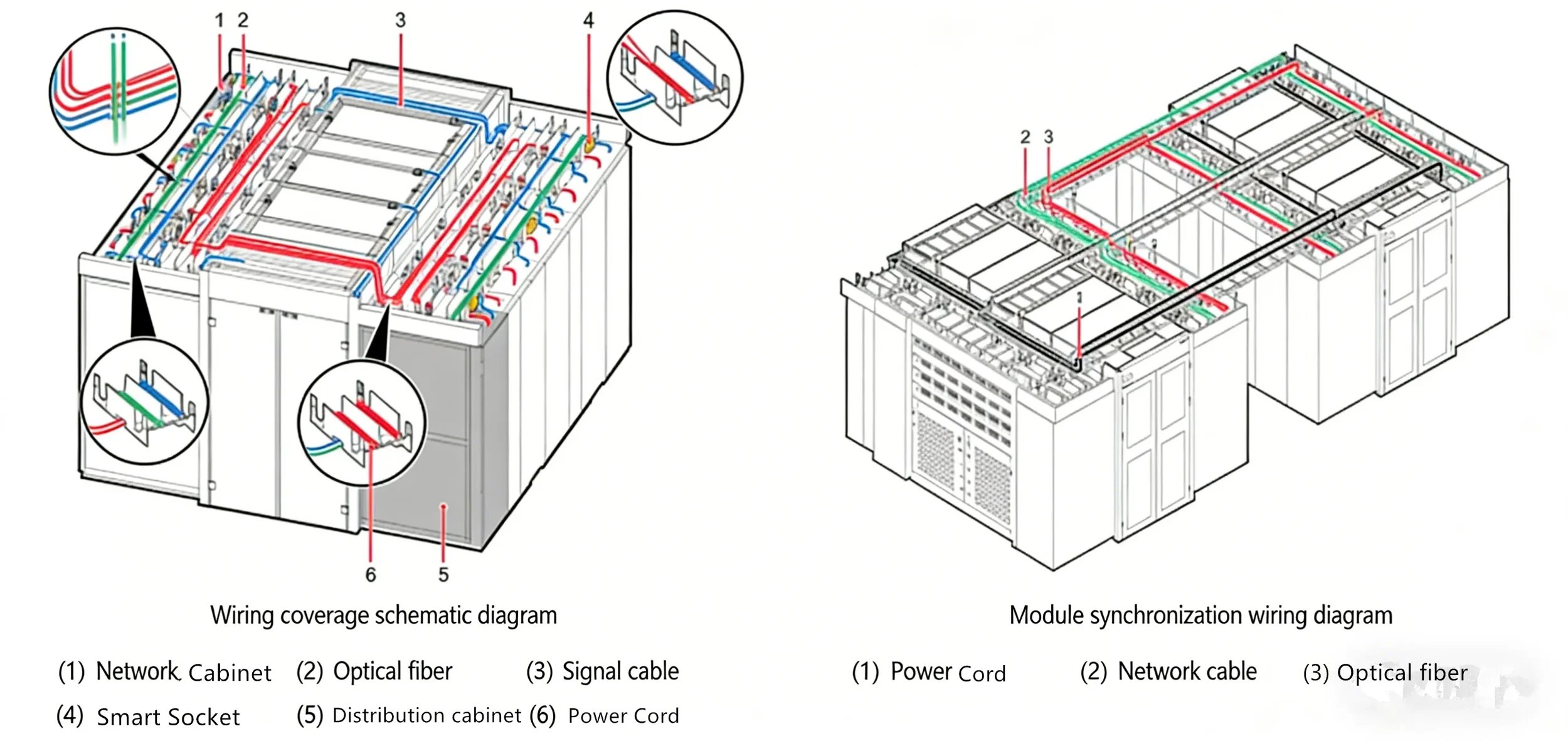
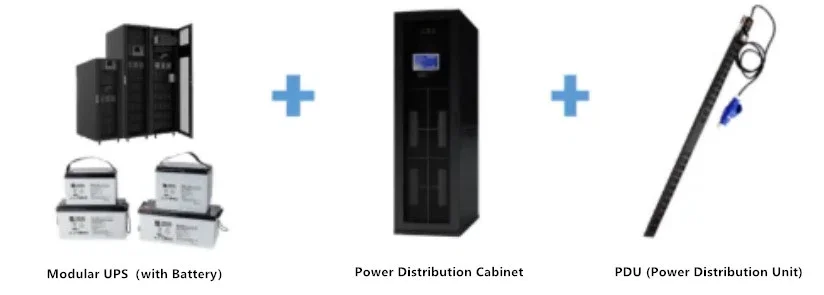
2. Power Supply and Distribution System (Modular UPS, Precision Distribution Cabinet [PDC], Batteries, PDUs)
Modular, hot-swappable UPS. Capacities range from 20–90 kVA for single-row configurations and 160–360 kVA for dual-row configurations, with overall system efficiency reaching up to 95%. The 2N architecture (dual-path power supply) ensures enhanced reliability, while an N+1 redundancy option is available for standard business applications. This high-frequency, double-conversion online UPS features variable-frequency air conditioning that adjusts according to load fluctuations, thereby achieving greater energy efficiency.
3. Cooling System (In-row Air Conditioning)
Fully enclosed hot and cold aisles. In-row precision air conditioning with left and right airflow delivery, shortening the supply and return air paths. Positioned close to heat sources for rapid cooling, thereby preventing temperature fluctuations. Features variable-frequency cooling for high efficiency and energy savings.
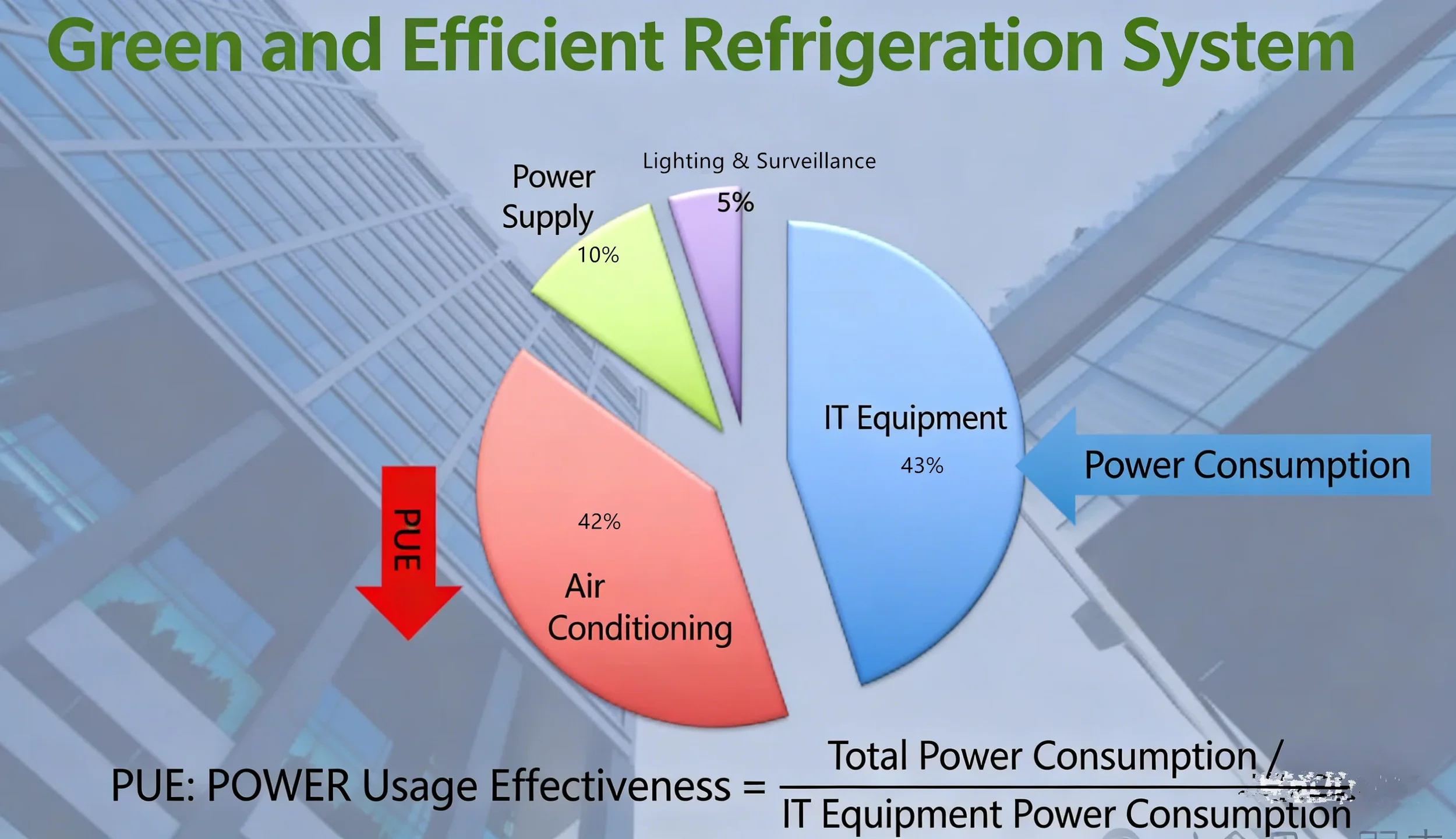
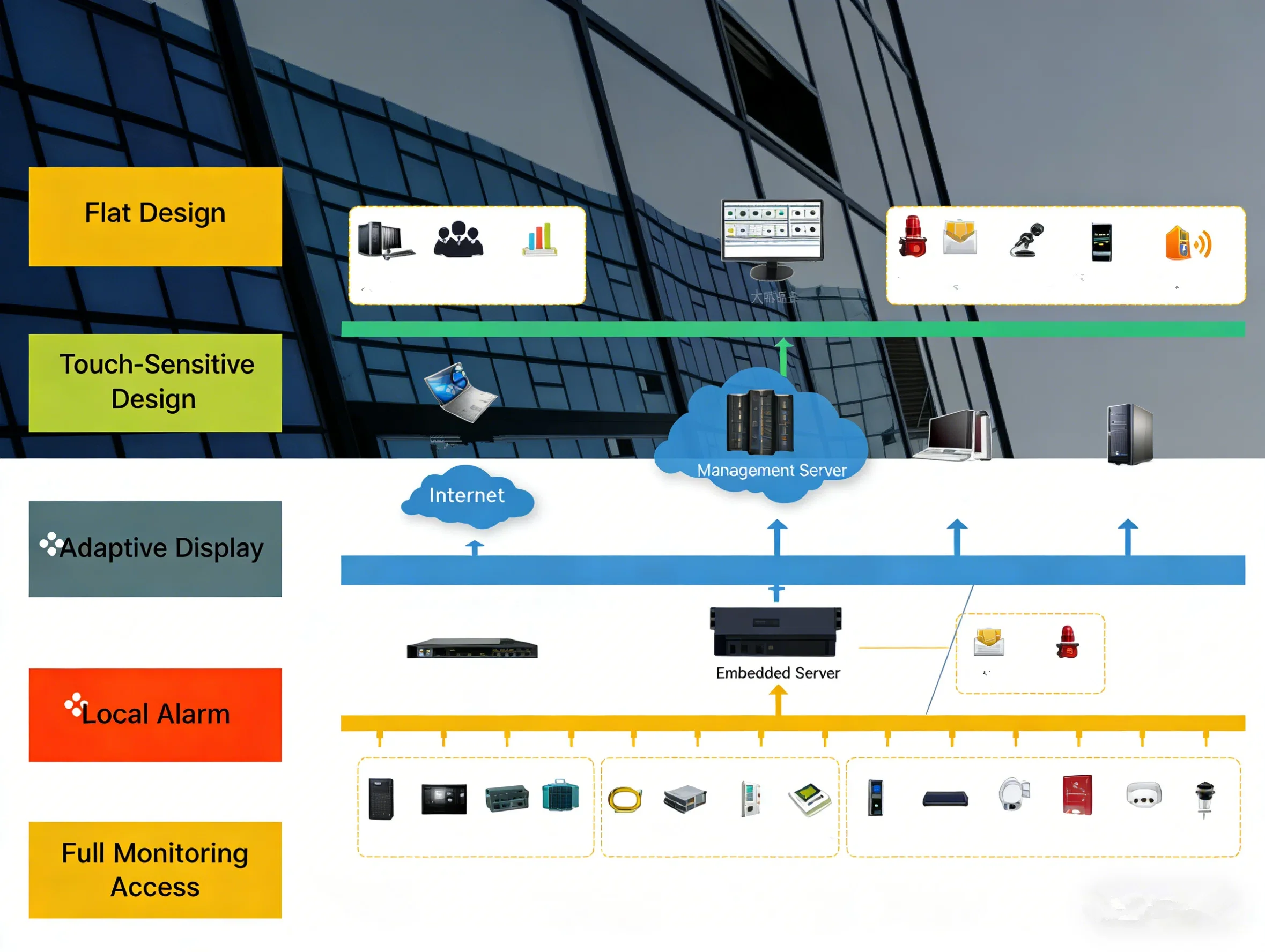
4. Management System (Environmental Monitoring System - EMS)
A dedicated mobile app allows for local viewing of the status of all devices, as well as the monitoring of critical power and environmental conditions within the cabinets. Designed for centralized management across multiple sites, the monitoring platform provides comprehensive operational parameters, energy consumption analysis, and real-time alarm notifications, thereby meeting the requirements for remote operations and maintenance, as well as daily unattended operation. The monitoring system also features fire safety linkage capabilities.
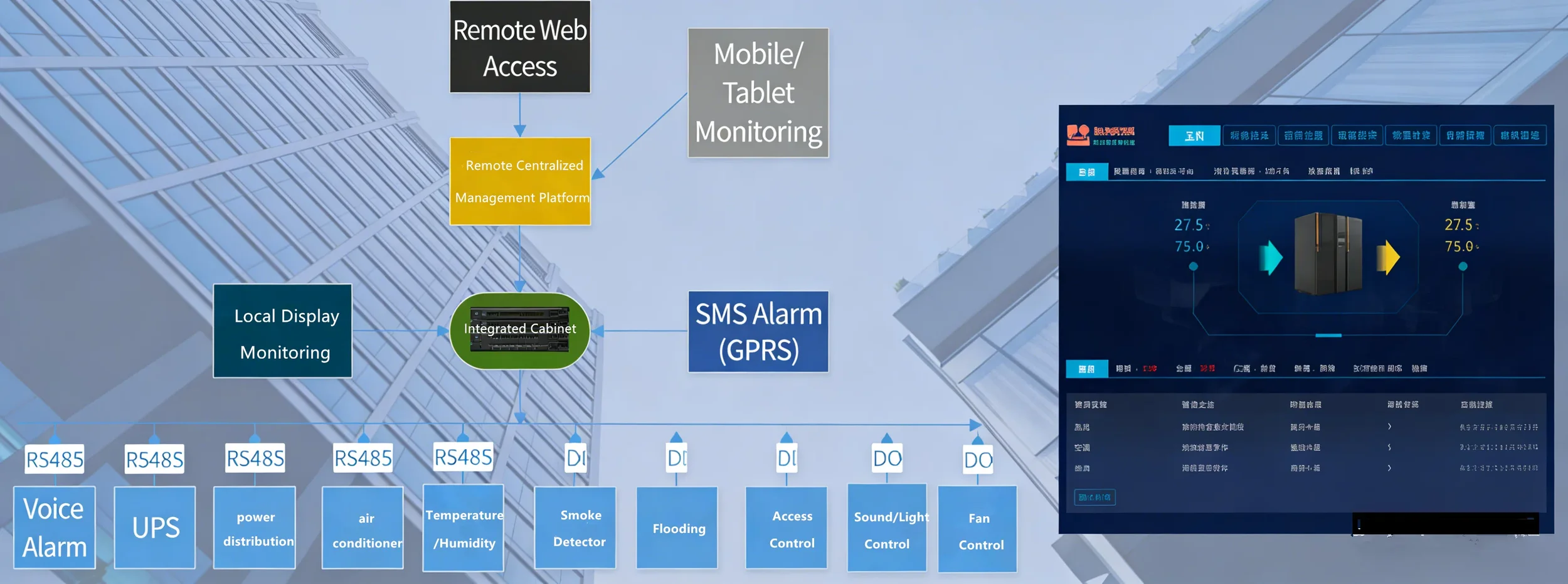
5. Fire Protection and Security Passageway System (Gas Fire Suppression, Access Control System)
The module is equipped with smoke detectors. When the fire protection system detects a fire signal, it issues a command to control the passageway end door, which is linked to the skylight. The fire extinguishing controller activates gas to extinguish the fire within the module. The security passageway door supports facial recognition, fingerprint, or IC card access control systems.
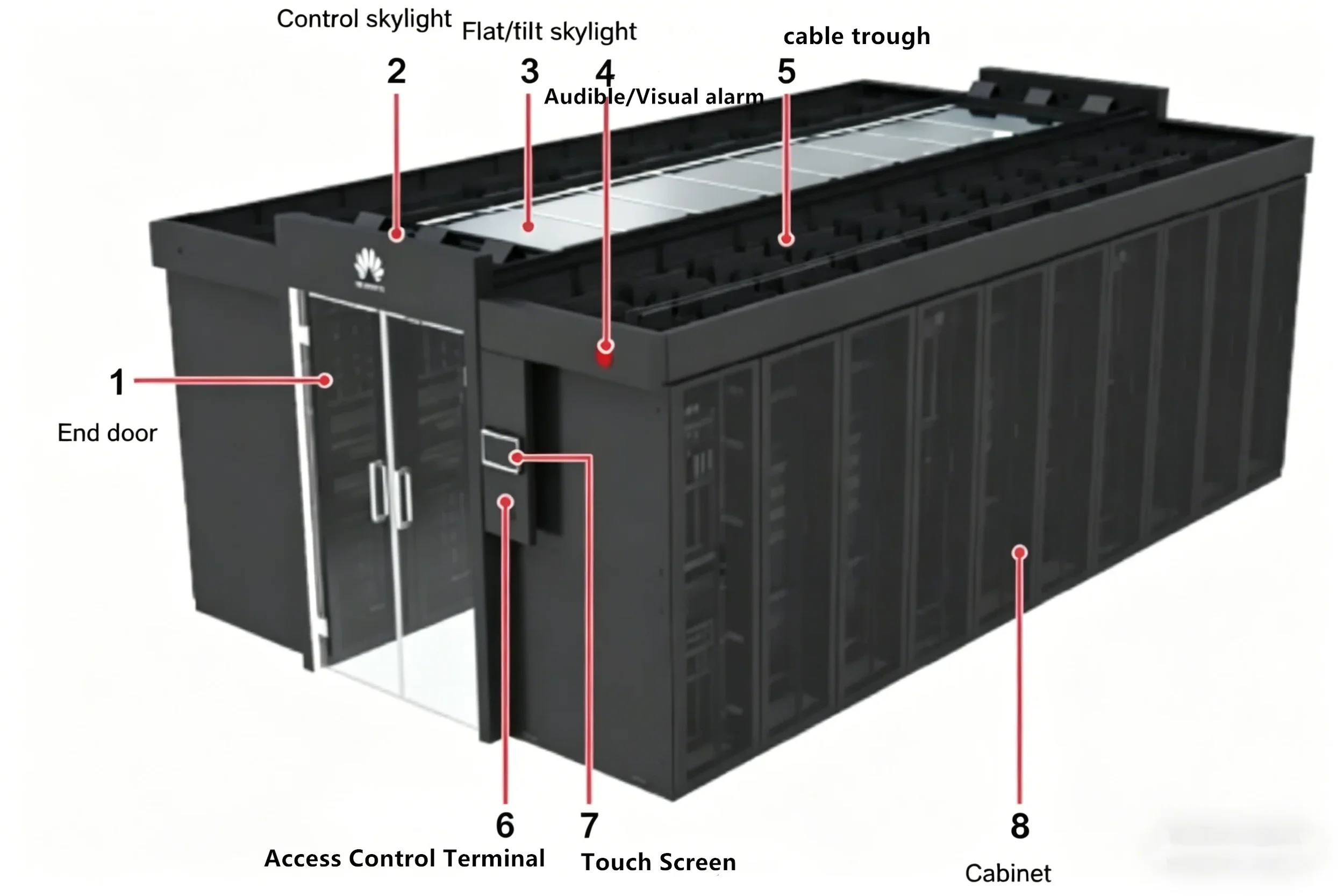
Traditional data centers have a PUE value of 2.1, while modular data centers have a PUE value of no more than 1.5, with a single rack power of 3kW, resulting in 30% energy savings. The dual-row solution supports multi-module cascading and redundant design (N+1/2N), offering scalability and high reliability. The single-row solution addresses the practical needs of data centers with limited space and insufficient maintenance personnel. This more flexible solution offers rapidly deployable computing power at 30%-50% of the cost of the dual-row solution, making it the "best partner" for edge computing.
If you want to convert your old IDC into an AIDC: UPS (Uninterruptible Power Supply) and power distribution cabinets can be retained (if the capacity is sufficient), but air-cooled air conditioners must be replaced with liquid-cooled ones, ordinary switches must be replaced with lossless switches, and all servers must be replaced with new ones.
For specific equipment selection, please contact Maggie(+86 13548769019) to discuss more professional customized solutions.
